The car feels steady until you apply the brakes. Then the steering wheel starts to shake, and the vibration eases when you release the pedal. It is tempting to blame a warped disc and order a replacement.
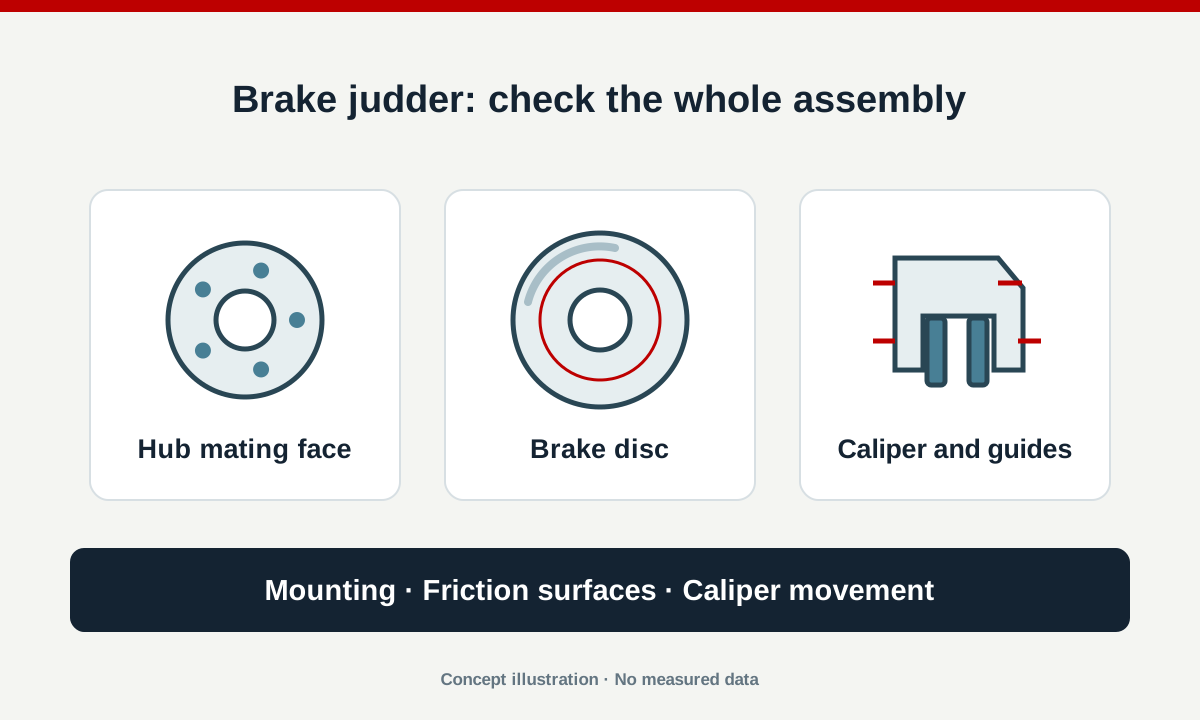
The discs are an important place to check, but they are not the whole story. The condition of the friction surfaces, the way the disc sits on the hub, caliper movement and worn chassis components can all matter. If the underlying cause remains, new discs may only provide a temporary improvement.
Pin down the conditions
Does the vibration occur with light or moderate pedal pressure? Is it there from cold, or only after several brake applications? Can you feel it through the steering wheel, brake pedal or seat? Note any recent tyre changes, wheel removal or brake work. If a detail has not been observed, leave it open rather than guessing.
If the car also vibrates at a particular speed without braking, tyres, wheels and chassis components need attention too. ABS operation during an emergency stop or on a low-grip surface can cause pedal pulsation. That does not mean every recurring vibration during normal braking is normal ABS operation. Do not carry out hazardous emergency stops to find out.
Thickness variation and runout need separate measurements
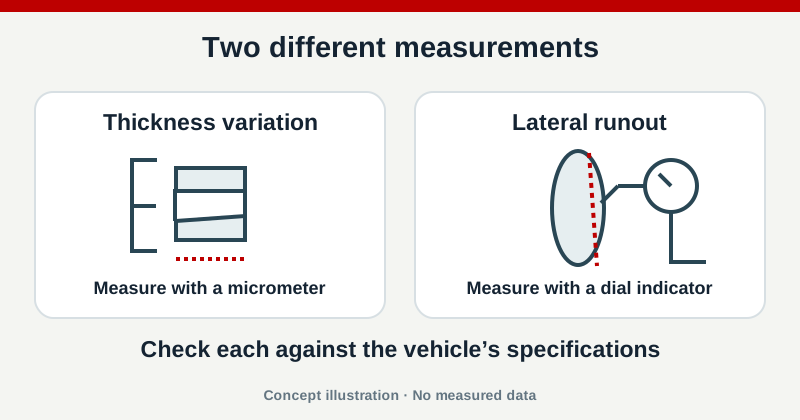
Disc thickness variation, or DTV, is a difference in thickness around the disc. As these areas pass between the pads, they can produce a pulsation during braking. Lateral runout is the side-to-side movement of the disc face as the hub rotates. The two can be related, but measuring one does not establish the other.
A technician uses a suitable micrometer to measure thickness and a dial indicator to measure runout, at the specified positions and with the disc correctly secured. The hub must be checked as well. Heat spots, corrosion and uneven deposits of pad material provide further clues. A disc that looks shiny or feels smooth is not necessarily within specification; the limits must come from the relevant vehicle and component information.
New discs still need sound mounting and a working caliper
Rust or dirt on the hub face, or incorrect installation, can prevent the disc from seating properly. Wheel fasteners must be tightened in the specified sequence and to the correct torque. A sticking caliper piston or guide pin can cause drag and uneven wear. Bearing play and worn or loose suspension and steering joints also need to be investigated.
Whether a disc should be replaced or may be machined depends on its remaining thickness, condition and the manufacturer's requirements. Do not sand the friction surfaces yourself or try to smooth them out with repeated hard stops from high speed. Stop testing and seek professional inspection if there is marked pulling, reduced braking performance, an abnormal pedal feel, a burning smell or severe vibration.
Once assembly and static checks are complete, a professional should reassess the original braking condition safely. Follow the specific bedding-in instructions for new discs and pads rather than applying one mileage or stop count to every vehicle. Confirm that the cause has been addressed, not just that the vibration has briefly disappeared.
For vehicle-specific repair information, select your model in Repair AI and describe when the vibration occurs, where you feel it and any recent work. Add the actual measurements, and identify anything that has not yet been checked.
Look up my vehicle