The car shakes at a red light and feels sluggish when you accelerate. A scan shows P0300. With “engine misfire” in the description, spark plugs and ignition coils are often the first things that come to mind.
They are worth checking, but P0300 does not identify a failed part on its own.
What does a misfire mean?
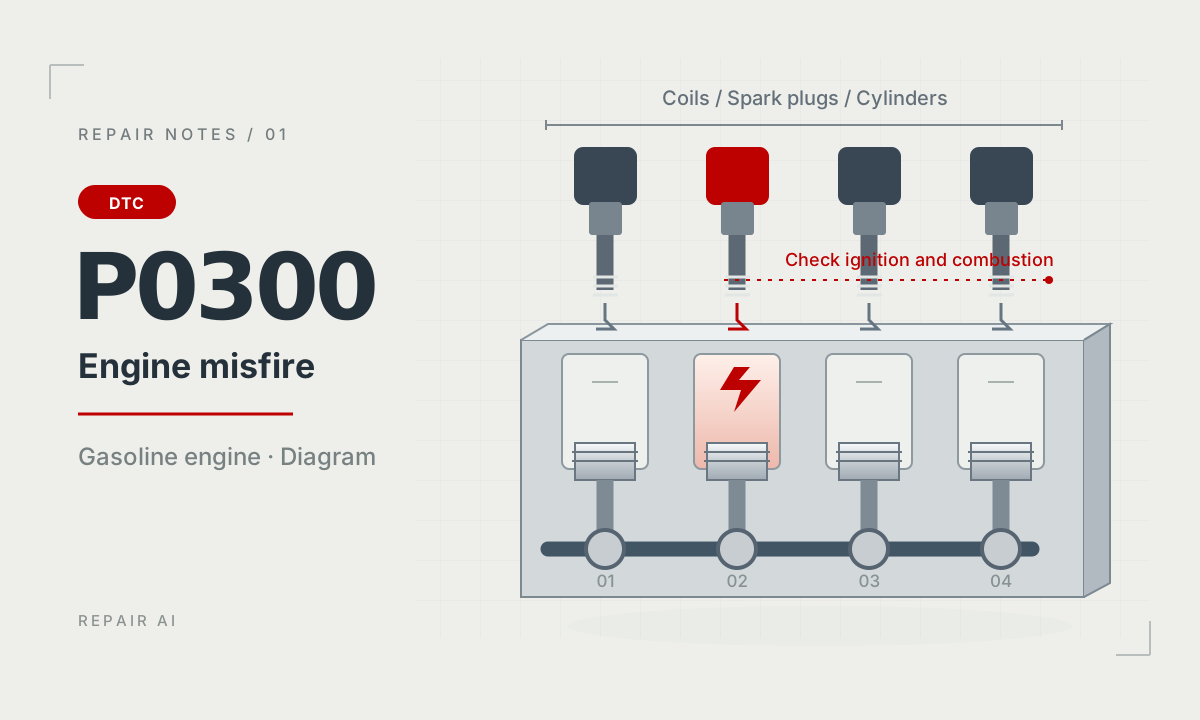
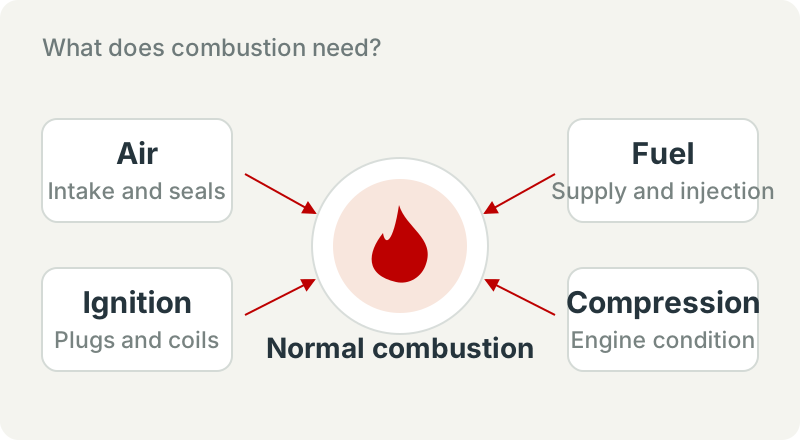
A gasoline engine needs the right mixture of air and fuel, a spark, and suitable conditions inside the cylinder. When a combustion event does not happen properly, it is called a misfire. Repeated misfires can make the engine shake, lose power or stall.
P0300 means random or multiple-cylinder misfires have been detected. Codes such as P0301 or P0302, if present as well, provide clues about particular cylinders.
Worn plugs or a faulty coil can affect the spark. An injector or fuel supply problem can upset fueling. An intake leak can alter the mixture, while a compression problem can prevent normal combustion. Replacing the plugs alone may therefore leave the fault unresolved.
When it happens can tell you a lot
Before taking the car to a workshop, note a few details. Does it shake only on a cold start, or when warm too? At idle, under acceleration or uphill? Did the problem start after refueling or recent servicing?
If it appeared straight after a plug change, the part specification, installation and electrical connections deserve attention. A cold-start fault also needs to be assessed using cold-start data; a smooth-running warm engine does not settle the question.
These observations help a technician narrow the search. Save all fault codes and the operating data recorded when they were triggered before clearing them.
Where should the checks start?
Accessible connections are a useful starting point: loose coil or injector plugs, damaged wiring, poor contacts, and plugs with cracks, wear or unusual deposits. A connection fault can affect a component that is otherwise working.
Diagnostic data can show which cylinders are affected and when. A suspected ignition fault needs to be verified. If ignition checks do not explain it, the next steps depend on the evidence and may involve fuel delivery, injection or intake leaks. Compression and other mechanical checks may be needed if the earlier tests do not account for the misfire.
Procedures and specifications vary between engines. Repair decisions should follow the test results.
Check again after the repair, including the conditions in which the fault originally appeared, where safe. A code staying away briefly after it is cleared does not prove that an intermittent fault has been fixed.
If the check-engine light keeps flashing and the engine shakes noticeably, stop driving and arrange an inspection. Persistent misfires can damage the catalytic converter. Avoid repeated hard acceleration to test the car.
To look into P0300 on your own car, select your vehicle in Repair AI and enter the code. Add whether the symptoms occur cold, warm, at idle or under acceleration to see the relevant explanation and repair guidance.
Look up my vehicle