You have driven for a while, but the heater still feels lukewarm and the temperature gauge sits lower than usual. A scan reveals P0128. One person says to replace the thermostat; another blames the cold weather.
Cold weather can slow warm-up. P0128, however, means the engine control system has detected that the coolant is not reaching the temperature the thermostat is designed to maintain. It is worth investigating. This is not an overheating code, and it does not identify a failed part on its own.
How can a thermostat slow warm-up?
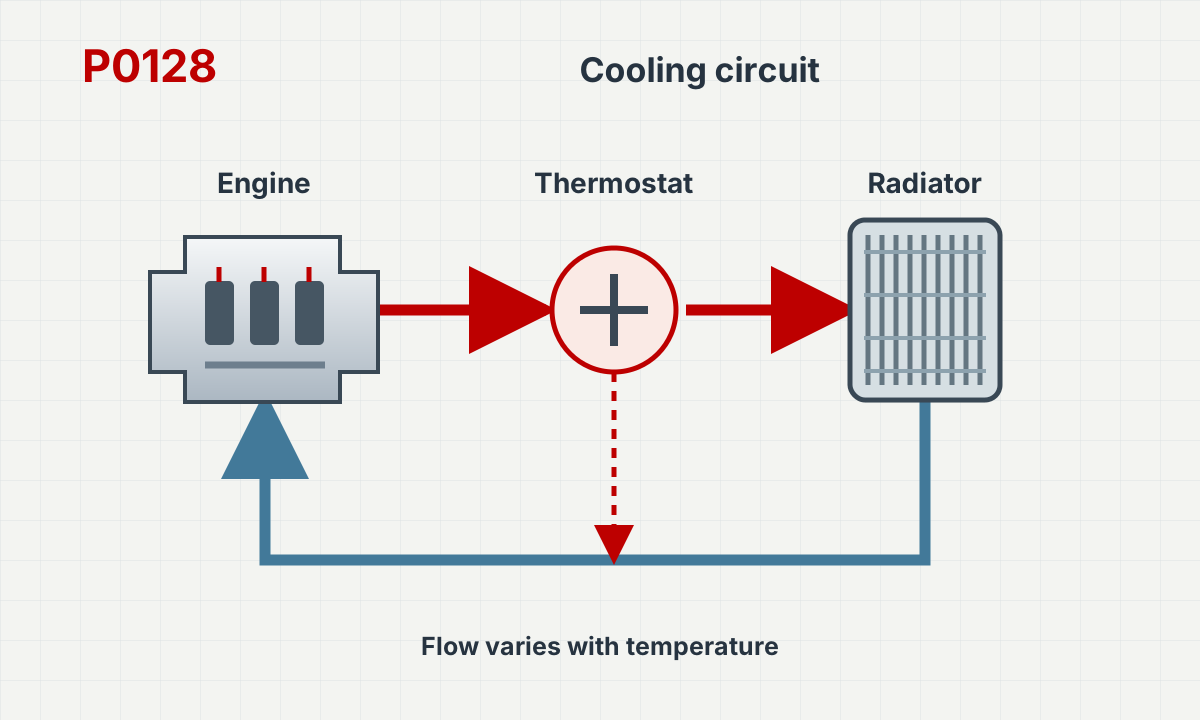
A newly started engine needs to warm up. The thermostat regulates coolant flow to the radiator as temperature changes, balancing warm-up with heat removal.
If it does not close properly or sticks open, coolant can reach the radiator too early and carry heat away. The engine may then struggle to reach its intended temperature. Weak cabin heat or a low gauge reading can be clues, but heater faults have other causes too. Neither symptom proves the thermostat is faulty.
Is the engine cold, or is the reading wrong?
Scan-tool temperatures come from sensors. An inaccurate sensor or wiring fault can make the computer think a warm engine is still cold. A technician can compare coolant temperature after the engine has fully cooled with ambient temperature and other available readings, then observe warm-up.
Low coolant and trapped air also deserve attention, particularly after a coolant change, hose repair or leak. Check the level when cold and mention if you have been adding coolant regularly. Never open a hot cooling system: hot liquid and steam can cause burns.
Thermostat operation, fan control and wiring should then be assessed using the vehicle's service information. Opening temperatures, warm-up times and fan strategies are not universal.
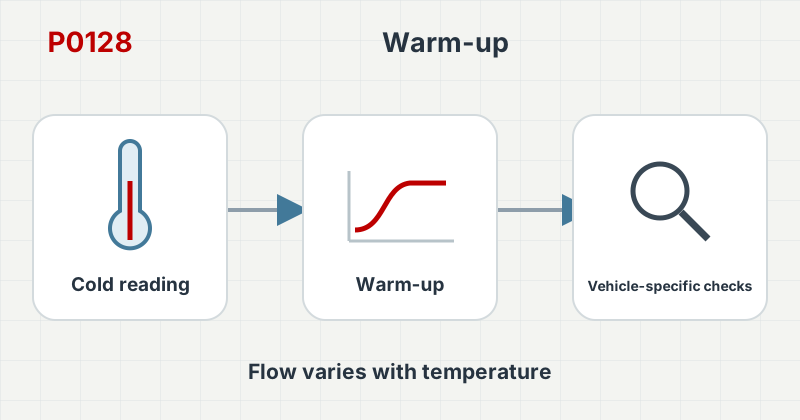
Check the warm-up process after the repair
Tell the workshop the outside temperature, how long you drove, how the heater behaved and whether the cooling system was recently serviced. Save codes and freeze-frame data before clearing them.
After repair, coolant filling, bleeding and warm-up checks should follow the vehicle's procedure. A warning light that stays off briefly does not prove the fault is fixed; temperature should rise normally and the relevant monitor should not flag the fault again. Overheating warnings, a substantial leak or steam call for stopping, rather than continuing to drive as if this were merely slow warm-up.
In Repair AI, select your vehicle and enter P0128 along with the heater, temperature and recent repair details to find the relevant explanation and repair guidance.
Look up my vehicle