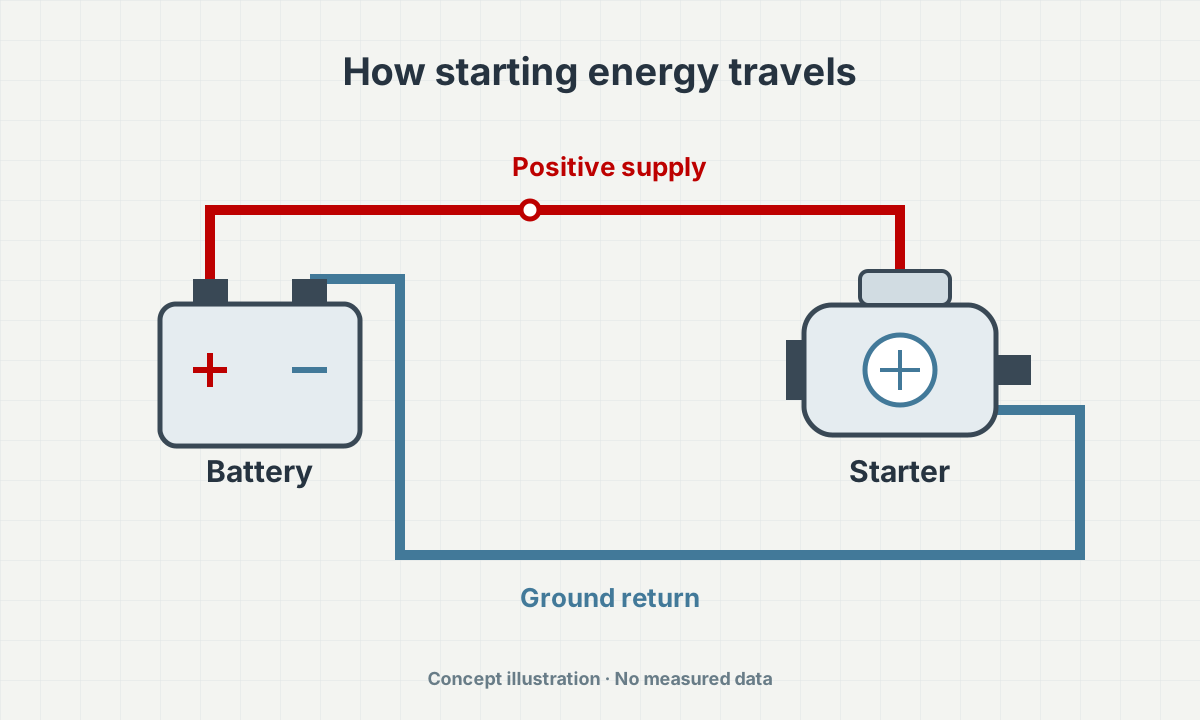
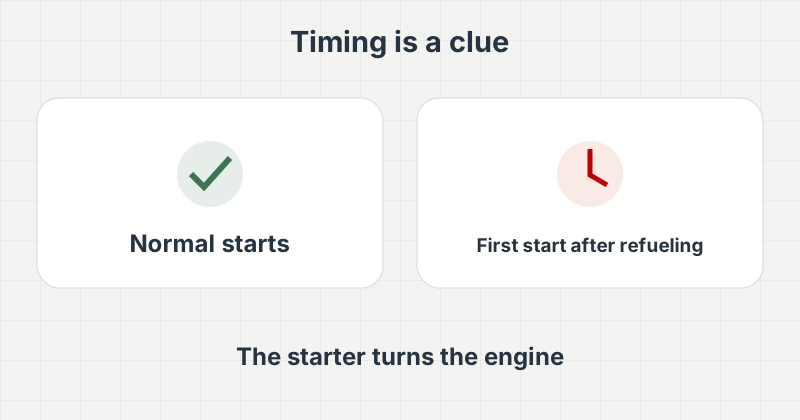
Your car usually starts right away. At the fuel station, though, the starter turns the engine but it takes several attempts to fire. It may shake briefly when it does, then start normally again later.
When this repeatedly follows refueling, that timing matters. It does not automatically mean bad fuel or a dead battery. First distinguish slow cranking from an engine that cranks but struggles to start. This article addresses the latter, mainly in gasoline vehicles.
A connection that is easy to overlook
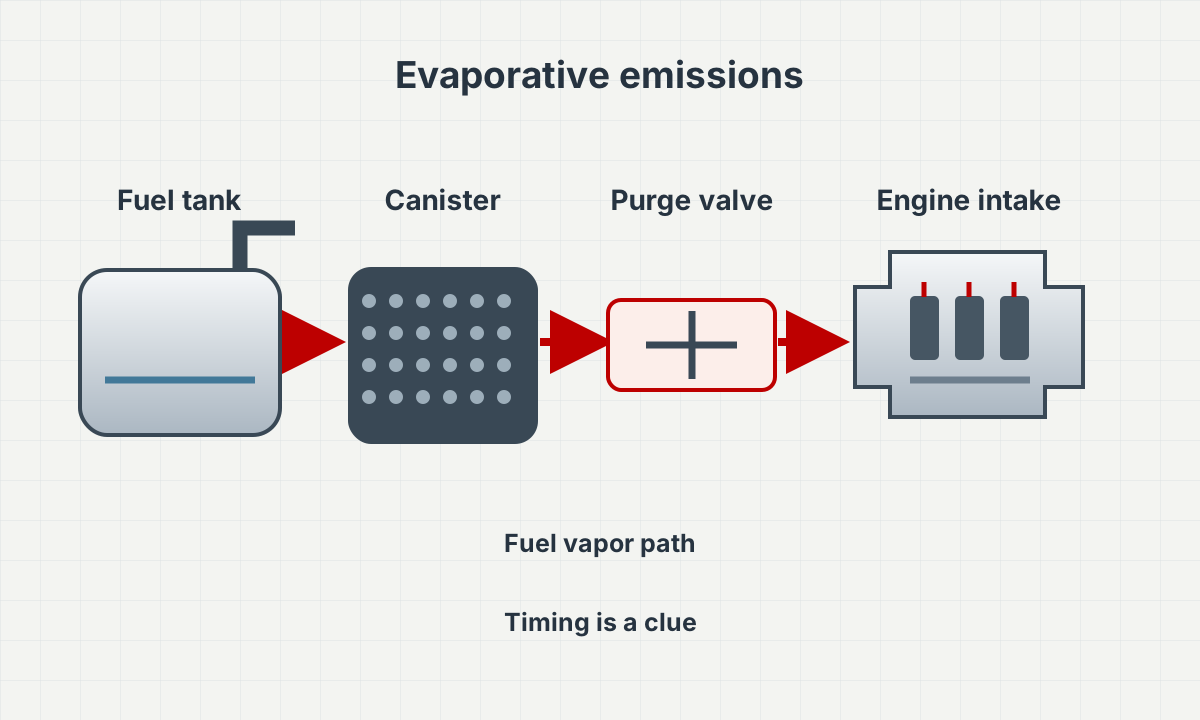
Gasoline produces vapor. Many vehicles store it in a charcoal canister, then use a purge valve to admit it to the engine when the control system allows. The evaporative emissions system is connected to the intake; it does more than deal with fuel smells.
If the purge valve does not close properly, vapor can enter the intake at the wrong time and disturb the starting mixture. On some vehicles, that can cause difficulty starting after refueling. It is worth checking when the car starts normally at other times but consistently struggles after refueling.
It is still only a lead. A technician needs to check whether this applies to your vehicle and whether the valve actually leaks. Fuel pressure, injection, ignition and other faults can produce similar symptoms.
Describe exactly when it happens
Does it follow every fill-up or only some? Is only the first start affected? Is there rough idling, stalling, a warning light or a strong fuel smell? Do you keep adding fuel after the nozzle shuts off?
Do not overfill repeatedly to reproduce the fault or crank continuously for long periods. Follow the owner's manual after automatic nozzle shutoff. If there is a strong gasoline smell or a visible leak, stop trying to start and arrange an inspection.
Those details tell a workshop more than “it will not start.” If codes have not been checked, say so; that is different from confirming that there are no codes.
Test the theory before replacing parts
A technician will generally preserve codes and data, check basic starting conditions, and use vehicle-specific information to assess the emissions-system valves, hoses and controls. A valve leaking despite a command to close is a different problem from an incorrect control command.
If that investigation finds nothing, fuel pressure, injection and ignition still need attention. A familiar symptom is not a reason to keep replacing canister-related parts. After repair, verify the first start after refueling during normal, safe use—not just whether clearing codes turns the light off.
In Repair AI, select your vehicle and describe “normal starts, difficulty on the first start after refueling,” including how the starter behaves, to find relevant repair guidance.
Look up my vehicle